
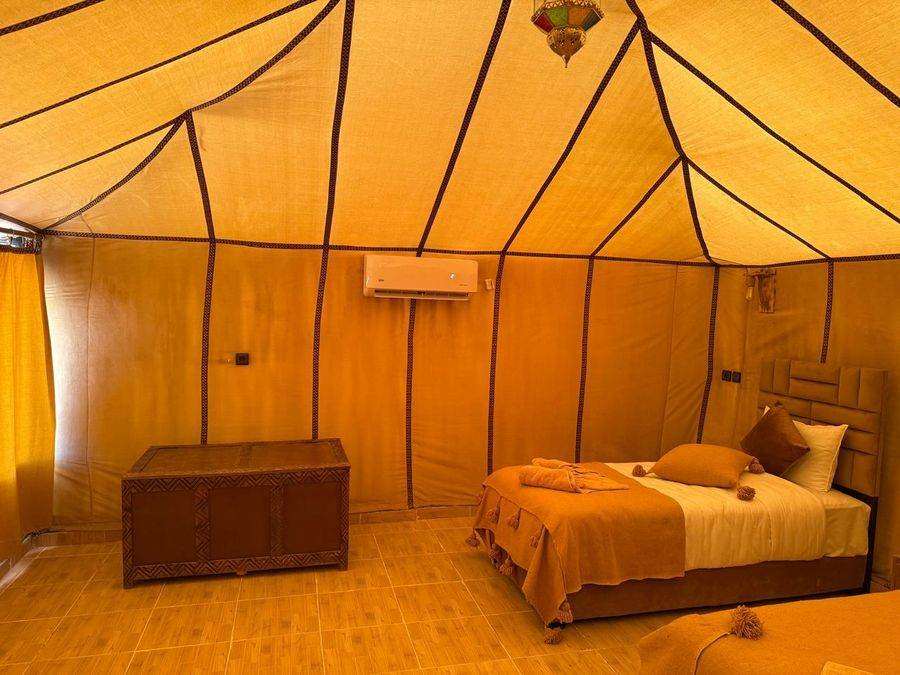
Standard
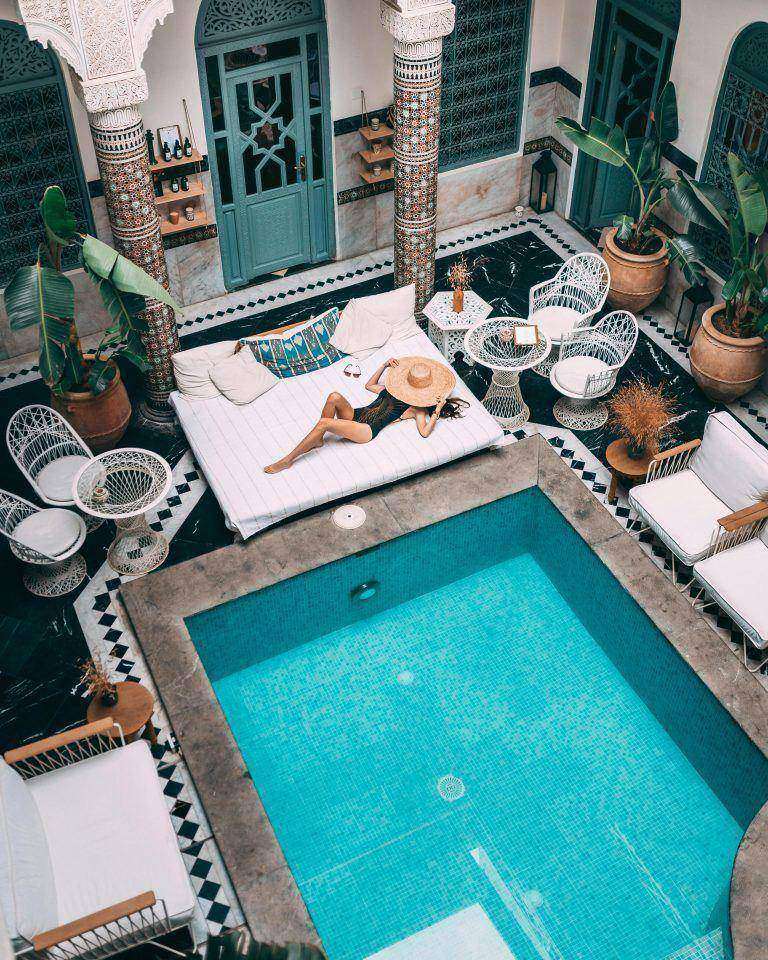
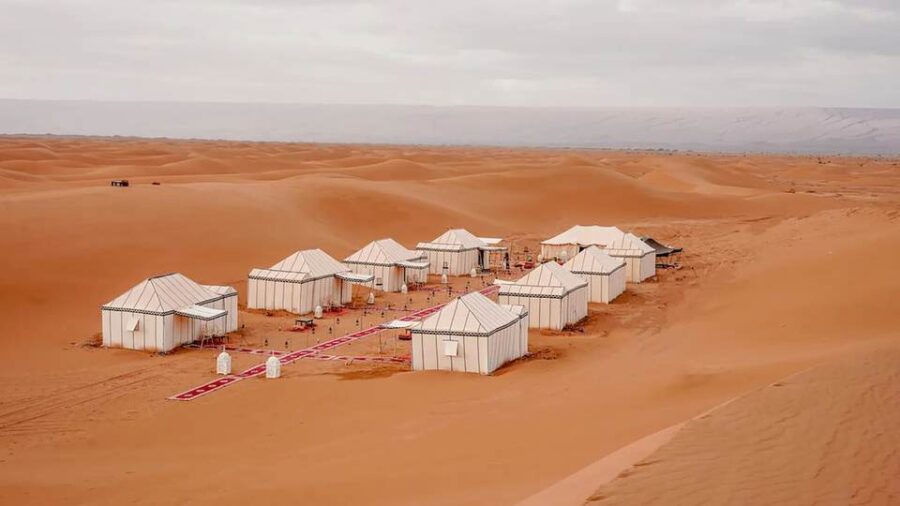
Charming riads and kasbahs and, in the desert, comfortable Berber tents with an authentic atmosphere.
Options and supplement30 days from Marrakech to Tangier through every corner of the country
A month is the time you need to see Morocco without cutting anything: the coast from Essaouira to the cliffs of Legzira, the Anti-Atlas, the saffron of Taliouine, the dunes of Erg Chigaga and Erg Chebbi, the canyons, the waterfalls, the imperial cities and the north up to Tangier.
We've built in a rest day every four or five days of travel, so you don't go home tired. Every stage can be lengthened or shortened as you prefer.
We meet you at Marrakech airport with a sign bearing your name and take you to your riad, in the heart of the medina. After welcome tea, if there's time, a first walk to Jemaa el-Fna: at sunset the square fills with stalls, Gnawa musicians and storytellers. Dinner at leisure.
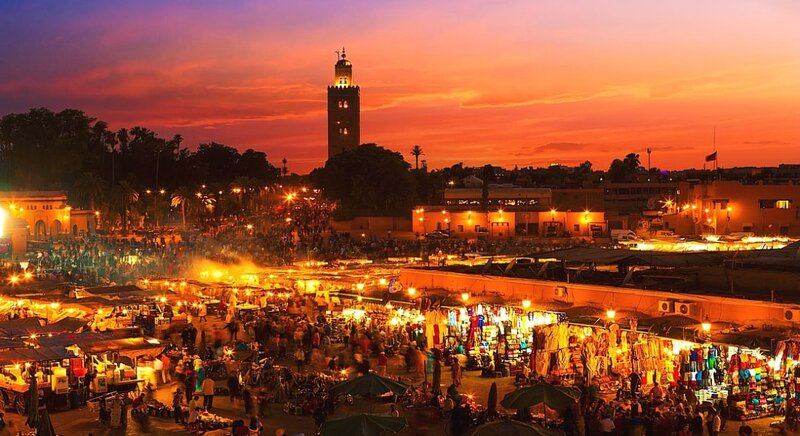
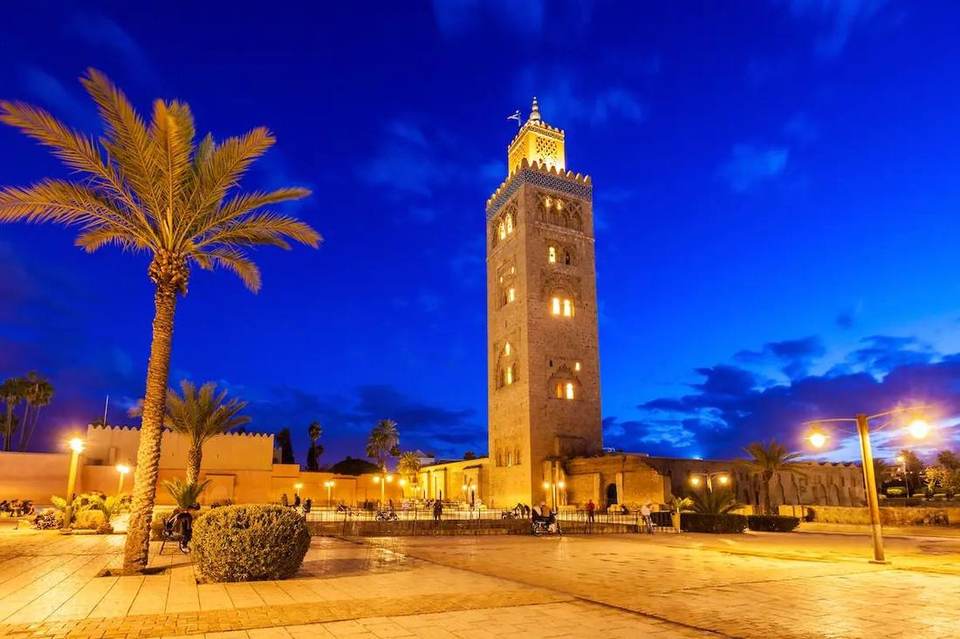
A guided walking tour of Marrakech at a relaxed pace. We start from the Koutoubia and enter the kasbah for the Saadian Tombs, then the Bahia Palace and the Jewish quarter of the Mellah with its spice market. After a coffee break on a terrace, the souks: Semmarine, the dyers' souk with coloured skeins hanging in the sun, and the spice square. Free afternoon for the Majorelle Garden or the Yves Saint Laurent Museum.
A free day to settle into the rhythm of the trip. We suggest a cooking class that starts with shopping at the market, a traditional hammam with black soap and a kessa glove, and the Majorelle Garden in the afternoon, when it's less crowded.
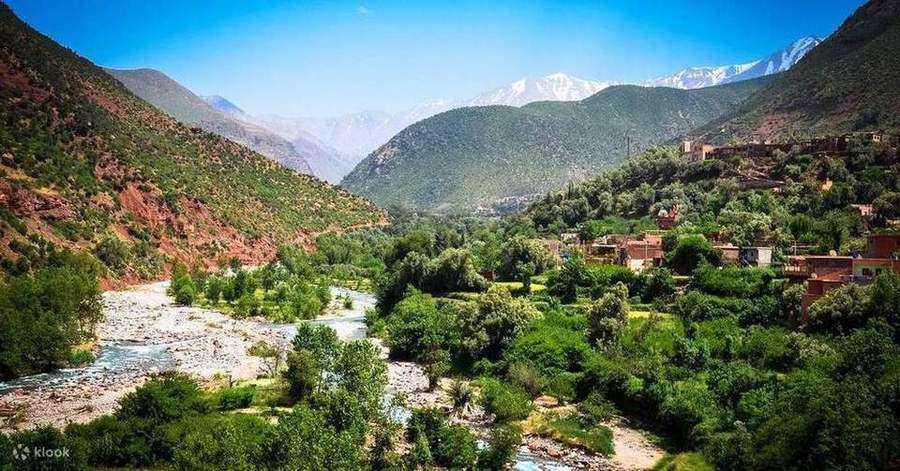
An excursion into the High Atlas an hour from Marrakech. The Ourika valley is green all year round: we visit a traditional Berber house, a village market and an argan cooperative. In Setti Fatma we walk up to the first waterfalls and have lunch at one of the riverside restaurants. Back in Marrakech in the afternoon.
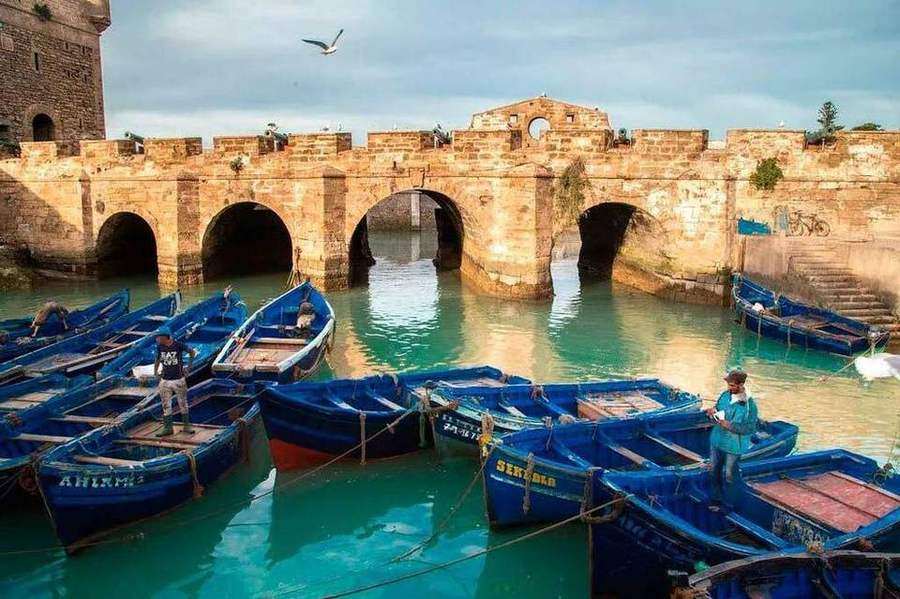
We leave Marrakech heading west, through olive groves and ever greener hills. Halfway we stop at a women's cooperative producing argan oil: you'll see how the kernels are cracked by hand and can taste amlou, a spread of almonds, honey and argan. Along the way, if we're lucky, goats perched in the trees. Arrival in Essaouira for lunch: an afternoon on the Skala ramparts with their Portuguese cannons, at the harbour among the blue boats and in the white medina, a UNESCO World Heritage site.
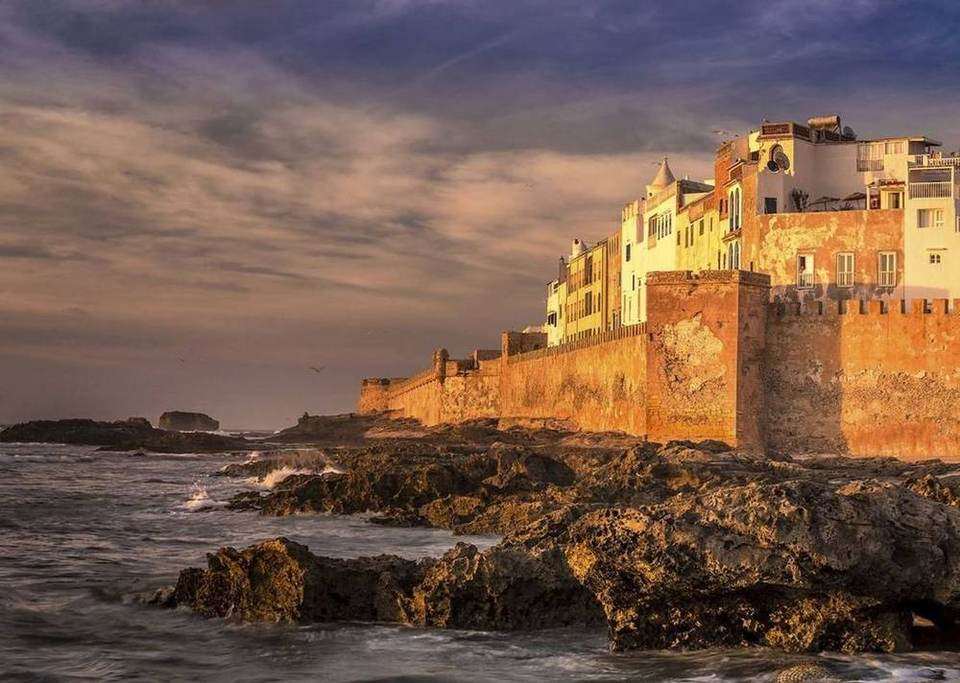
A day without the car. Essaouira is best explored on foot: the orderly medina with its blue doors, the fish market and the carpenters' workshops under the ramparts. Sea lovers can take surf lessons or go horse riding on the beach; those who prefer to relax will find a hammam and terraces overlooking the ocean.
Coast road south through surfer villages like Taghazout. A short stop in Agadir and then Tiznit, the silver town, with its red walls and jewellers' souk.
A morning on Legzira beach, famous for its red rock arches over the ocean. Arrival in Sidi Ifni, a Spanish town until 1969, with its white and blue art deco buildings.
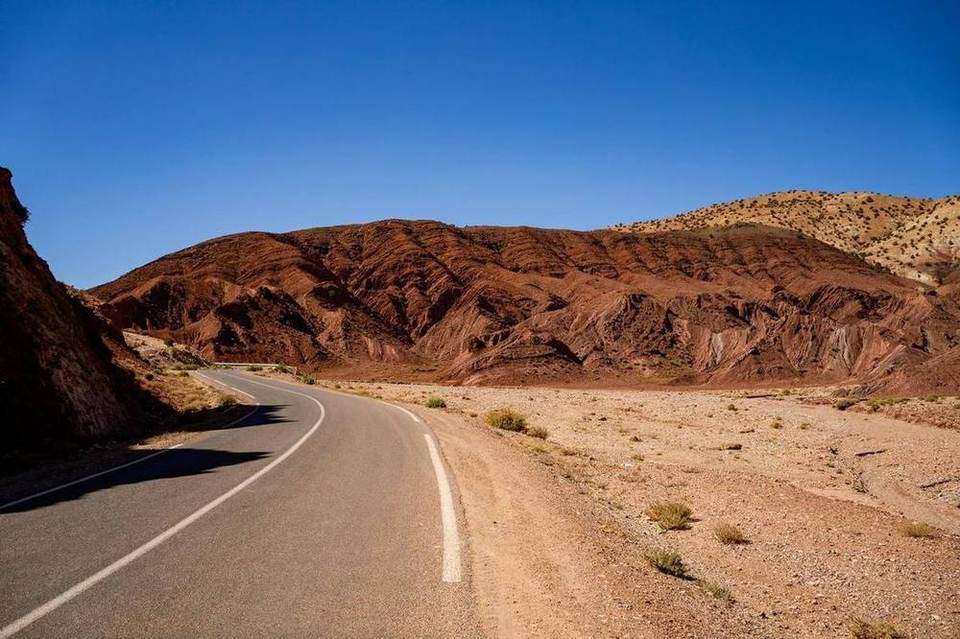
We leave the ocean and climb into the Anti-Atlas through narrow gorges and villages perched on ridges, with stone houses and barley terraces. Lunch on the way and arrival in Tafraoute in the afternoon, among pink granite boulders and palm trees.
A day in the Anti-Atlas. In the morning the Ammeln valley, with pink villages leaning against the mountain and date palms; lunch in a Berber home. In the afternoon the rocks painted blue by the Belgian artist Jean Vérame and 'Napoleon's hat', a huge granite boulder. Between February and March the valley is full of almond blossom.
A mountain road north, among almond and argan trees and Berber villages. Arrival in Taroudant, the 'little Marrakech': its earthen walls are intact for more than seven kilometres and its souk is still used mainly by local people. A horse-drawn carriage ride around the walls at sunset.
An hour and a half's drive between Jebel Siroua and the Anti-Atlas to Taliouine. Visit of a saffron cooperative. Night in a kasbah.
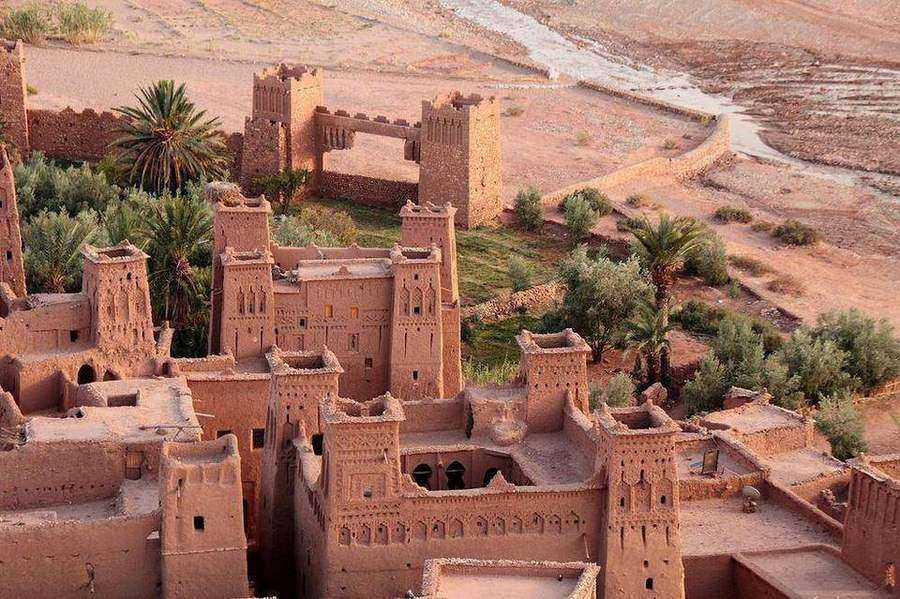
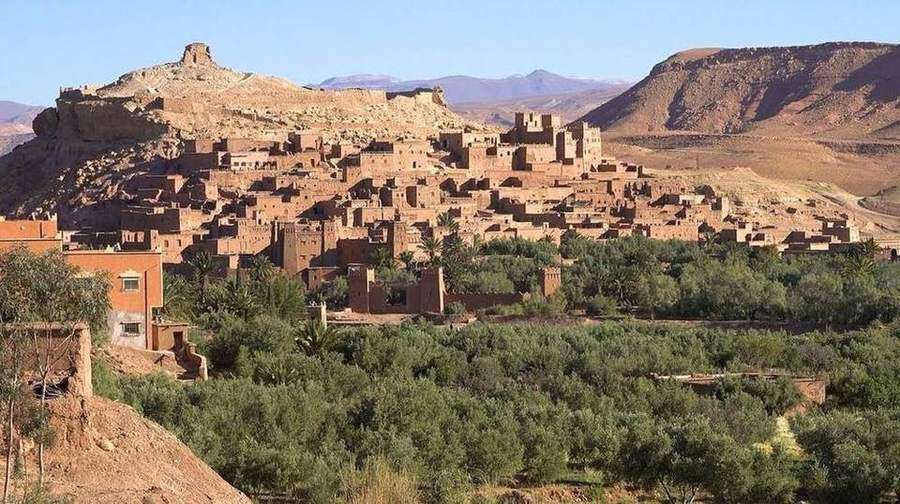
A morning at a saffron cooperative in Taliouine, where the stigmas of the purple crocus are picked by hand. Then the road crosses the plateau between Jebel Siroua and the Anti-Atlas to Ouarzazate. In the afternoon we reach Aït Ben Haddou for sunset. Night in a kasbah.
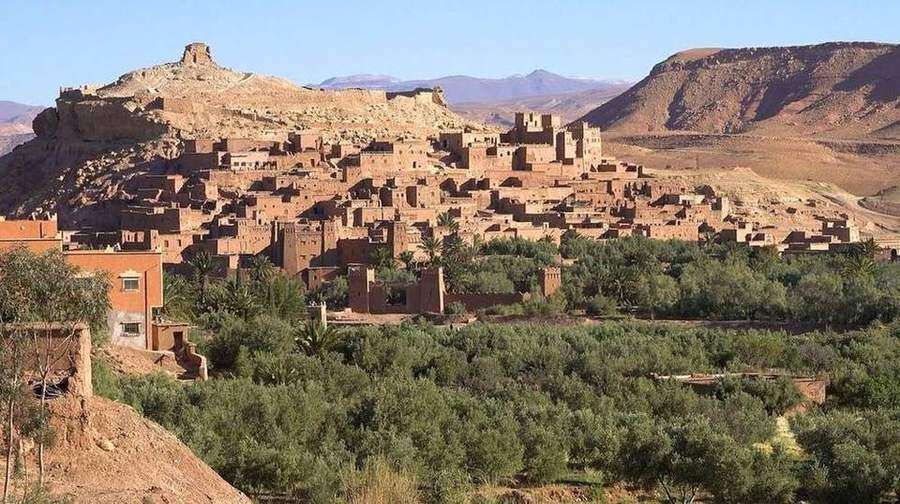
A rest day. At dawn the ksar is all yours; after breakfast you can take a walk in the Ounila valley or go and see the kasbah of Telouet, residence of the Glaoui pashas. Free afternoon by the pool.
After Ouarzazate we cross Jebel Bani and reach the Agdz viewpoint, from where you can see the Draa valley: over a hundred kilometres of palms, kasbahs and ksars along the river. A stop at the Tamnougalt ksar and arrival in Zagora in the afternoon.
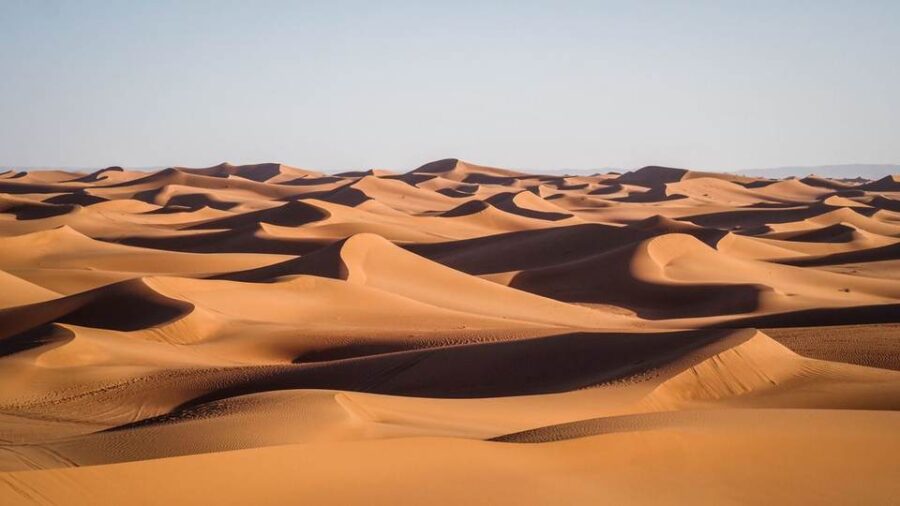
In the morning Tamegroute, a village famous for its green pottery and its Koranic library with manuscripts more than seven hundred years old. We continue to M'Hamid, the last village before the desert, where the tarmac ends. From here, about two hours of 4x4 track among dunes, acacias, nomad camps and the oasis of Sacred, to Erg Chigaga, the biggest and wildest desert in Morocco. Sunset from the highest dune. Night at camp.
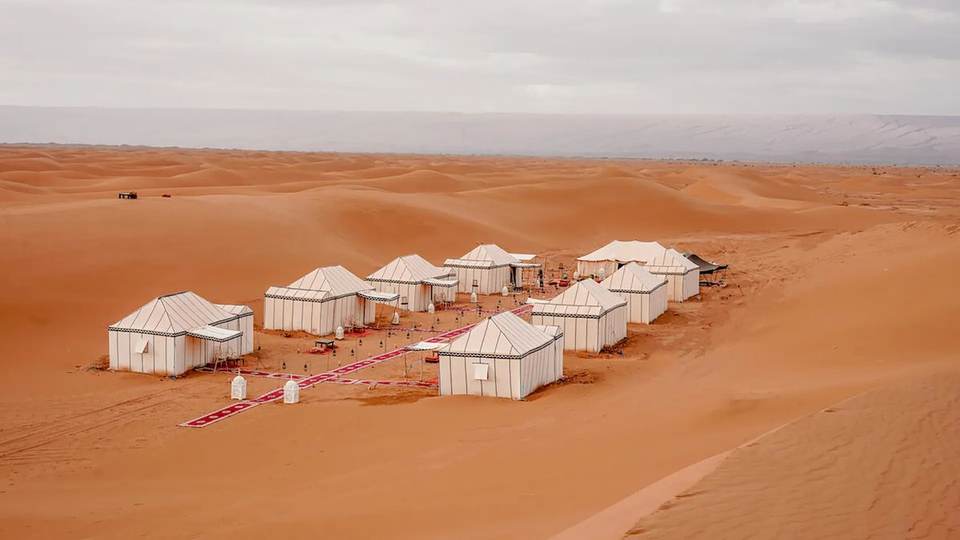
Sunrise on the Erg Chigaga dunes and breakfast at camp. Back along the track to M'Hamid and then up the Draa valley to Tansikht, where we turn east. Arrival in N'Kob, at the foot of Jebel Saghro, in the afternoon.
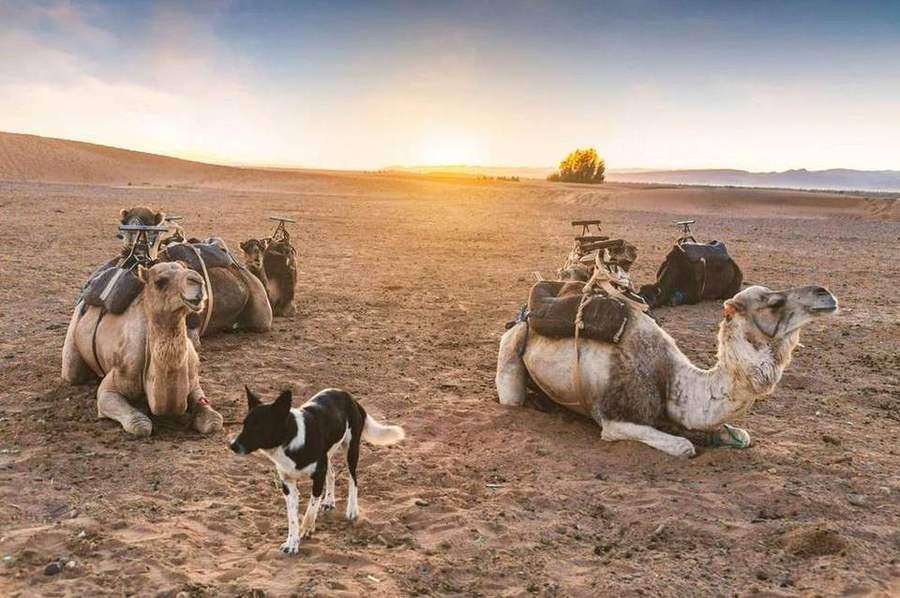
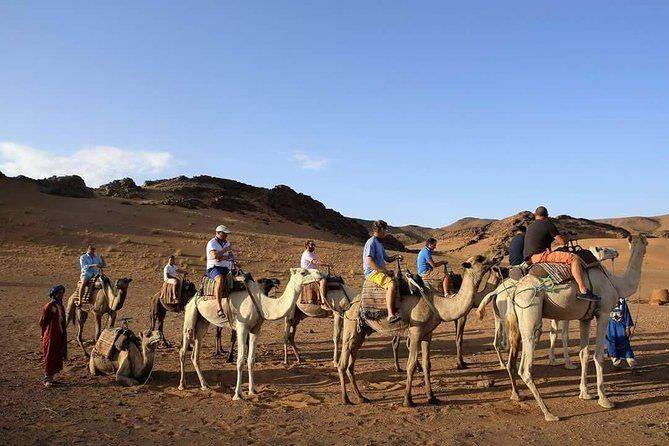
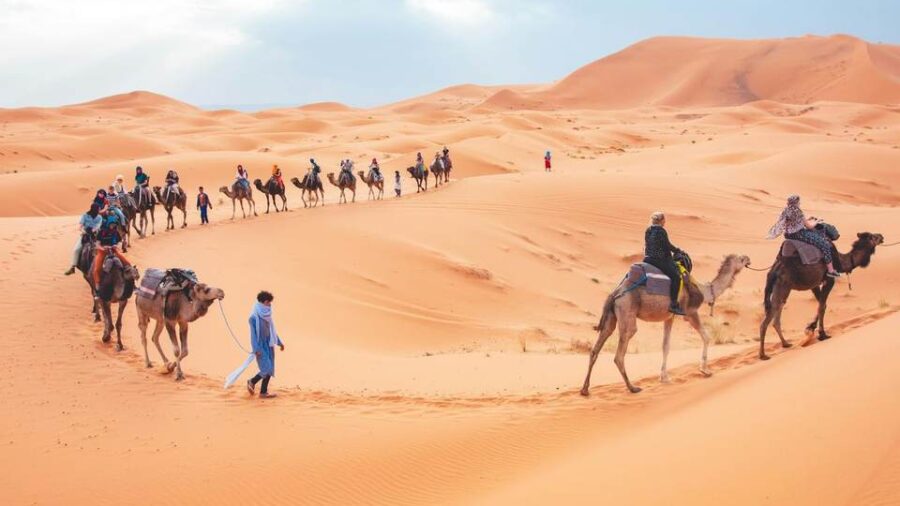
A road across Jebel Saghro, with stops in Alnif for the fossils and in Rissani for the souk. Arrival at the dunes in the afternoon. Sunset camel ride and a night at camp.
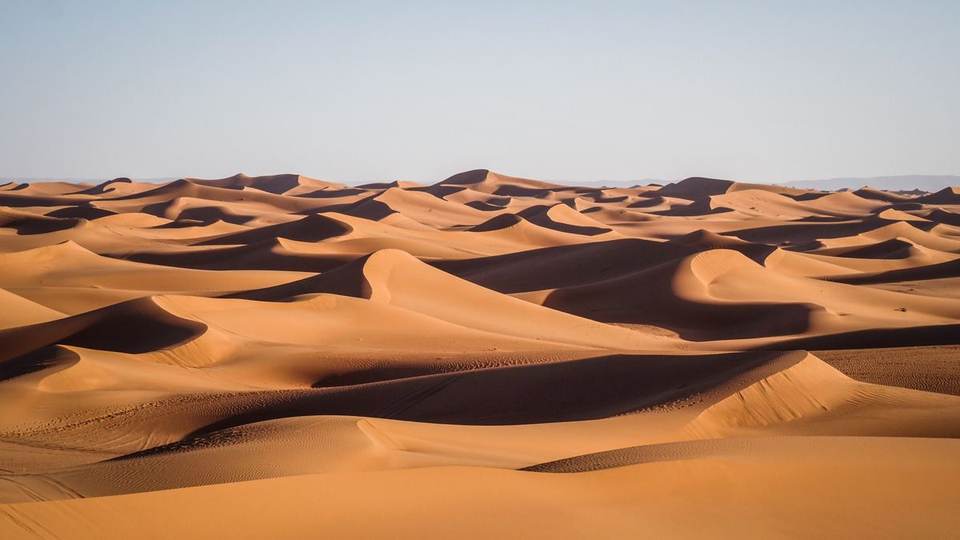
A day in the desert: sunrise on the dunes, a 4x4 tour with nomads and Khamlia, lunch with medfouna in Rissani and a restful afternoon at the hotel.
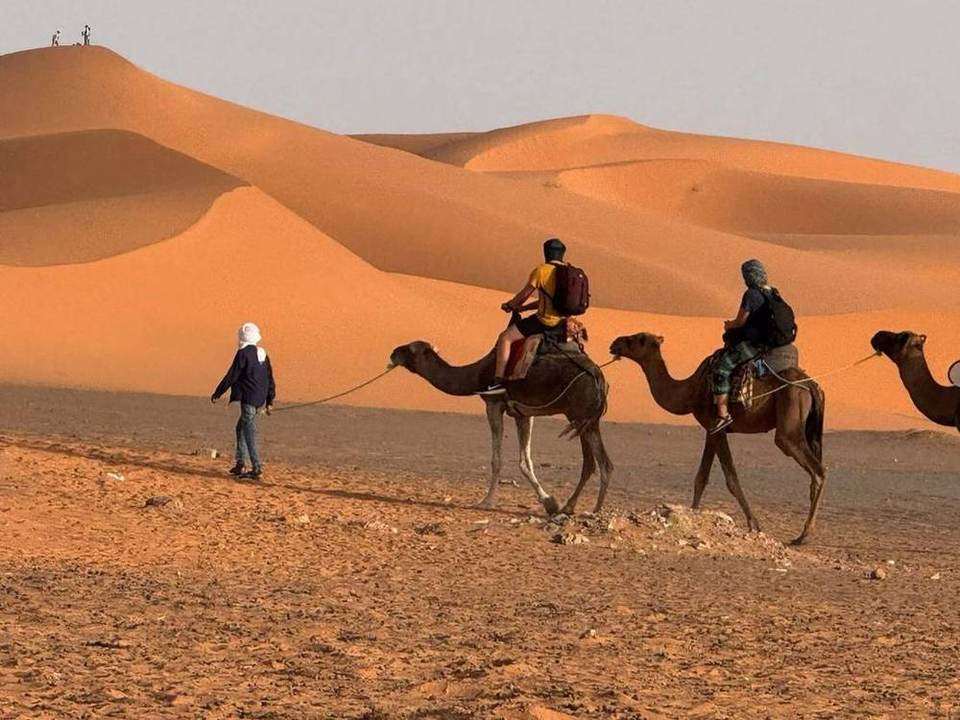
After sunrise tea at camp, we leave the dunes and cross a stony desert to the first oases. The stop in Tinejdad, with its khettaras, tells how people have lived here for centuries. Then the Tinghir palm grove and the Todra Gorge, where we walk through the narrowest stretch. In the afternoon the Dadès valley: Berber villages, almond trees, barley fields and the winding road of Tamellalt, one of the most photographed places in Morocco.
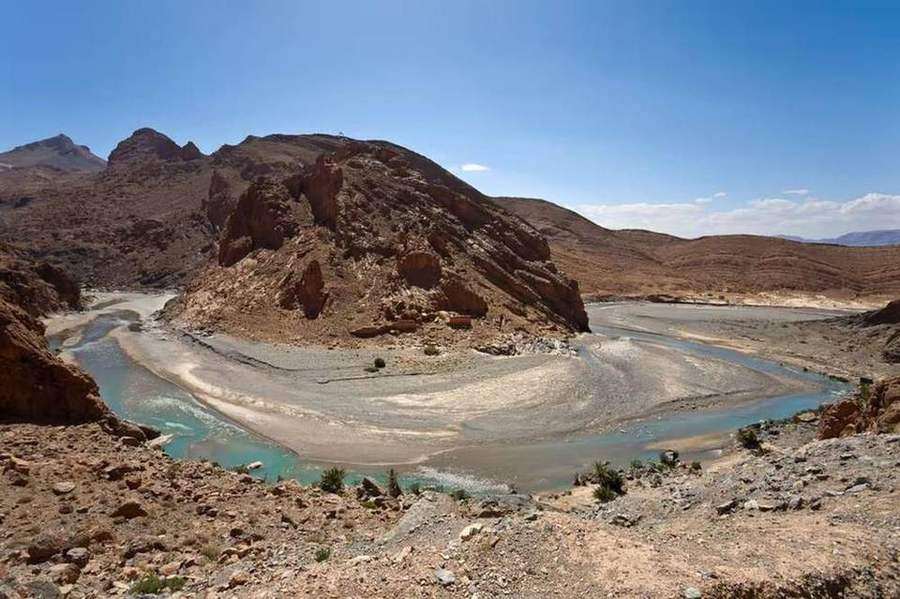
A long day heading north: the oases of Goulmima, Rich and the Ziz gorges, Midelt at the foot of Jebel Ayachi and then the cedars to Ifrane (about 7 hours with stops). Night in the mountains.
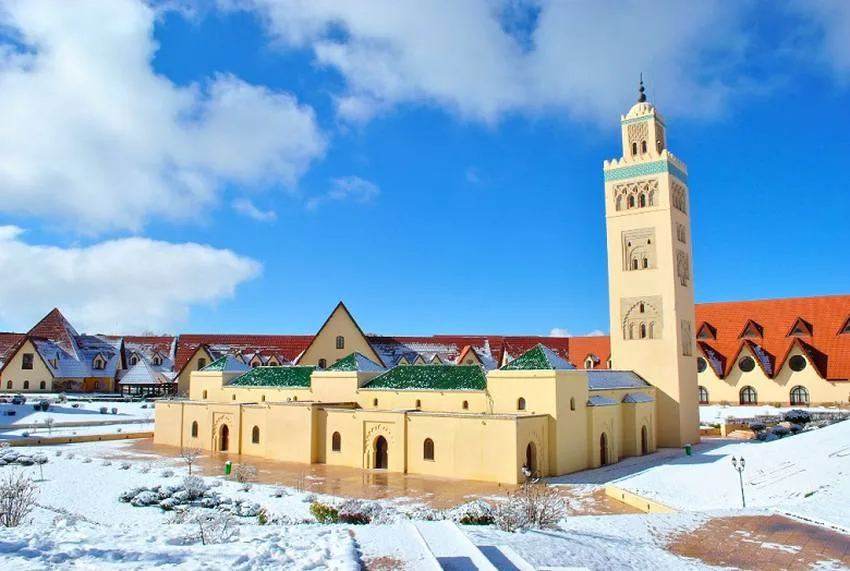
A morning in the Azrou cedar forest, where macaques live in the wild, and a walk through the centre of Ifrane, with its stone lion and gardens. Arrival in Fez for lunch and a free afternoon for a first stroll in the medina.
A day to understand why Fez is considered the spiritual capital of Morocco. The guide takes you through the madrasas, the Koranic schools with courtyards of marble and cedar, and tells you the story of the Karaouiyine, founded in 859 by a woman, Fatima al-Fihri. You walk through the craft souks, climb onto the terraces to see the tanneries and taste sfenj, the street doughnut. In the afternoon we visit the Dar Batha palace or the Jnan Sbil garden, a green oasis on the edge of the medina.
A free day in Fez. You can return at leisure to the lanes you visited with the guide, shop for blue ceramics and brassware, relax in a hammam or join a cooking class that starts with shopping at the market. In the evening, dinner at a rooftop restaurant in the medina.
Departure west to Volubilis, the Roman city among olive trees, with the Arch of Caracalla and the houses with the mosaics of Orpheus and Bacchus. Then Moulay Idriss, the white holy town, and Meknes, where we arrive in the afternoon for a stroll in el-Hedim square. Night in Meknes.
A morning in Meknes among the Bab Mansour gate, the Mausoleum of Moulay Ismail and the royal stables. Then about three and a half hours' drive through the Rif hills, planted with wheat and olive trees, to Chefchaouen, where we arrive for sunset.
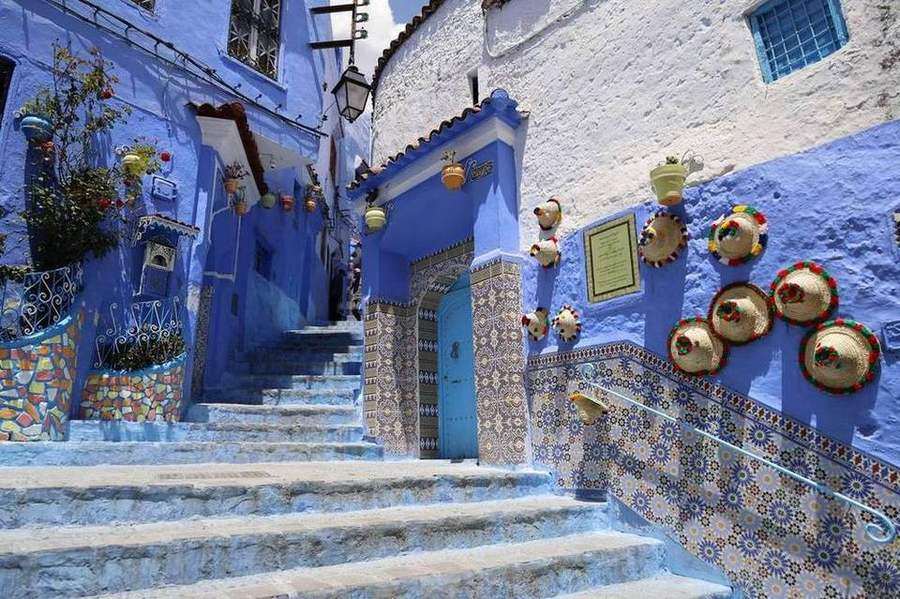
A day between nature and the blue city. In the morning an excursion to the Akchour waterfalls: you walk along the Farda river among rocks, little bridges and natural pools where you can swim in summer. Lunch with tajine at one of the small restaurants along the trail. In the afternoon, back in Chefchaouen, free time in the lanes: the kasbah, the Ras el-Maa spring and Outa el-Hammam square for a tea.
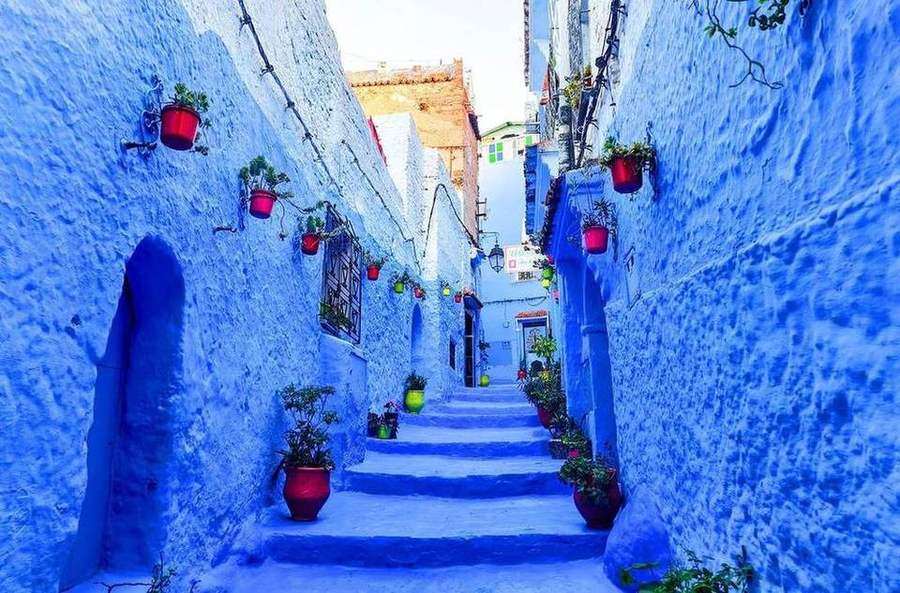
A last morning in the blue lanes and departure north. A stop in Tetouan for the white medina and the craftsmen's quarter. Arrival in Tangier in the afternoon: the kasbah, Café Hafa on the cliffs and Cape Spartel, where two seas meet.
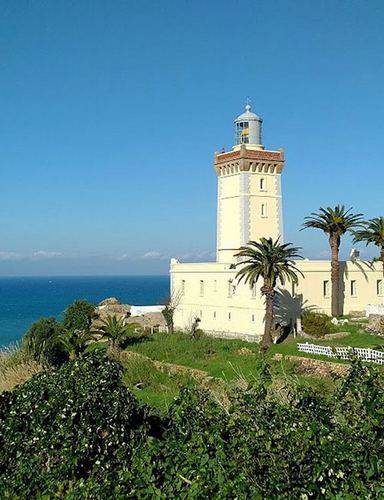
Half an hour's drive along the ocean to Asilah, a town fortified by the Portuguese in the 15th century. Its white houses are decorated with murals that artists repaint every summer during the festival. Fish lunch and, on the way back, sunset at Cape Spartel.
A last morning in Tangier: a stroll around the Grand Socco market, a tea overlooking the strait and farewells. Transfer to the airport or port, after a month that has taken you to every corner of Morocco.
Charming riads and kasbahs and, in the desert, comfortable Berber tents with an authentic atmosphere.
Options and supplement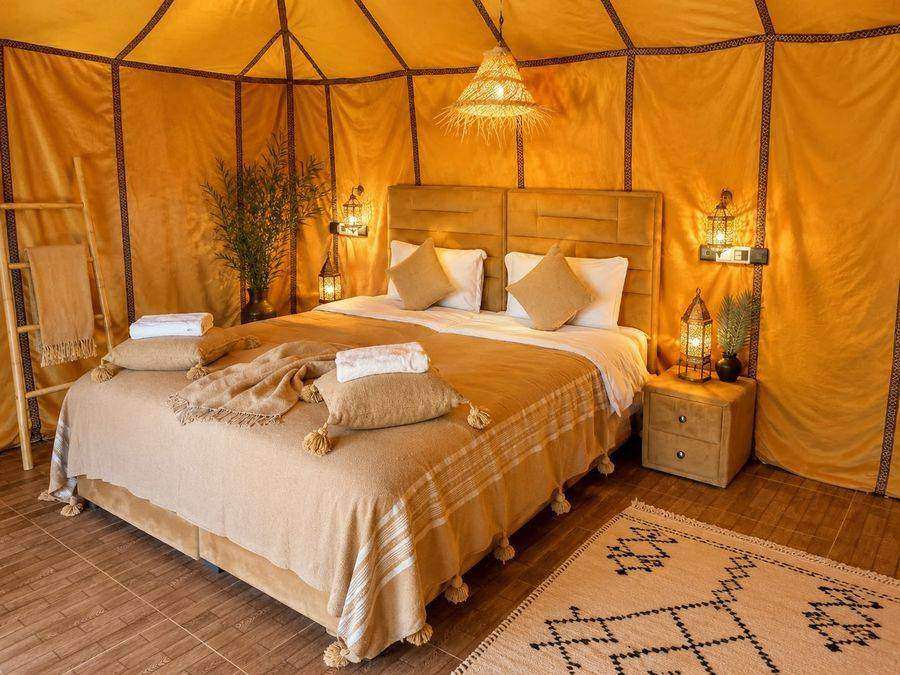
Selected accommodation with extra comfort and, in the desert, tents with private bathroom.
Options and supplement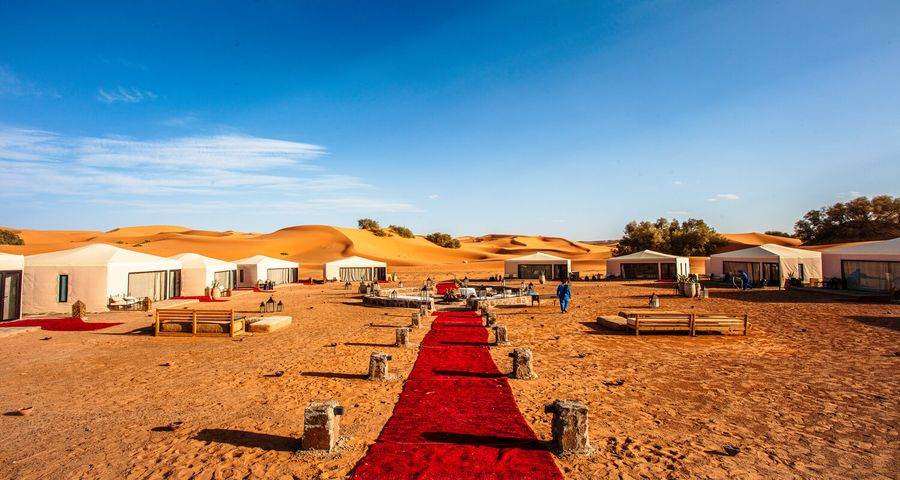
Luxury tented camp with double bed, private bathroom and dinner served under the stars.
Options and supplementWe pick you up from your accommodation at the agreed time.
Your luggage travels with you in the vehicle for the whole route.
If you'd rather not ride a camel, you can reach the camp by 4x4.
Documents, health and safety: check the latest information in the official travel advice for Morocco.
You can add quads, buggies or sandboarding. See the activities.
Have you done this tour with us? Share your experience: you'll help other travellers choose.
We've included rest days in Marrakech, Essaouira, Tafraoute, Aït Ben Haddou, Merzouga and Fez. On average you drive 3-4 hours a day.
Of course: you can split it into two trips, one in the south and one in the north, or shorten any stage.
Breakfast is always included and dinner almost every evening. In the bigger cities we leave dinners free so you can choose the restaurants yourself.
Two deserts in one trip: the dunes of Erg Chebbi…
View tour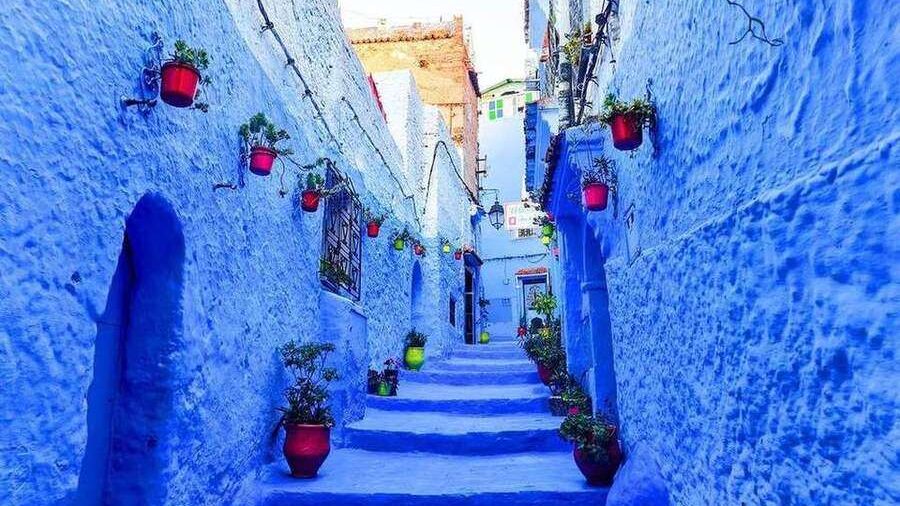
Three weeks from Tangier to Marrakech: the Rif, the imperial…
View tour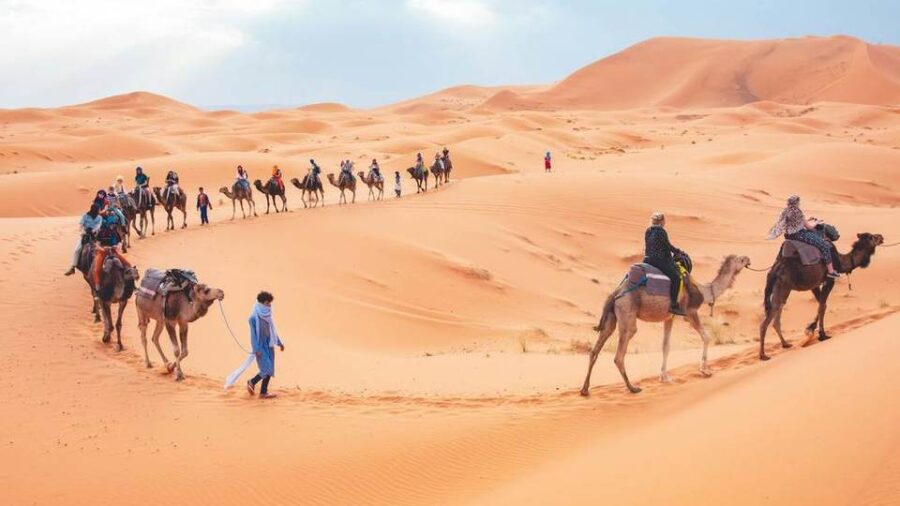
A sunset camel ride, a Berber dinner under the stars…
View tour
Write a review