
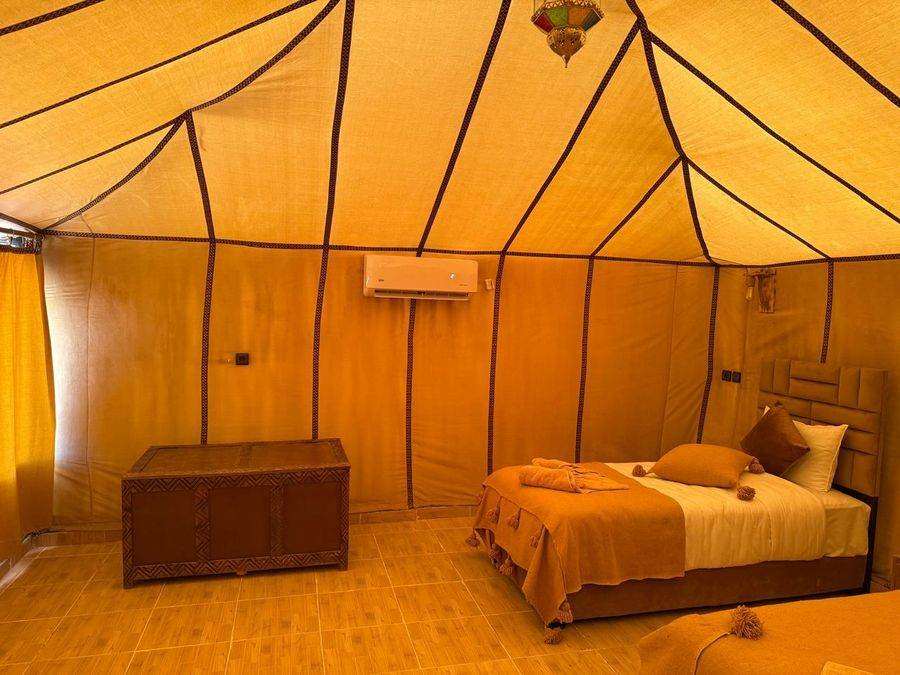
Standard
Charming riads and kasbahs and, in the desert, comfortable Berber tents with an authentic atmosphere.
Options and supplement14 days from the blue north to the Sahara, all the way to the breeze of Essaouira
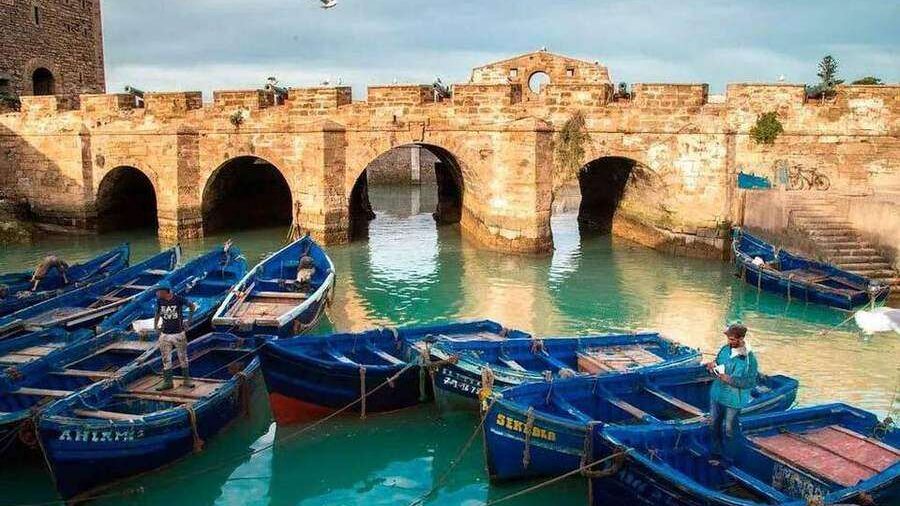
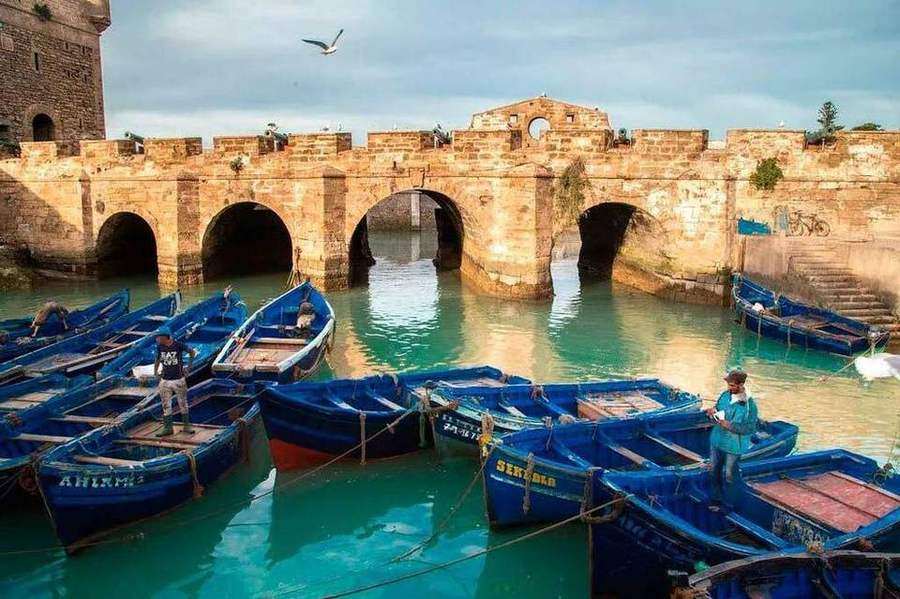
After the desert, the kasbahs and the souks, two days in Essaouira are the best way to end a trip to Morocco: the town is relaxed, the harbour is full of blue boats and the fish goes straight from the boat to your plate.
The rest of the route is our classic grand tour, with the right amount of time at each stop.
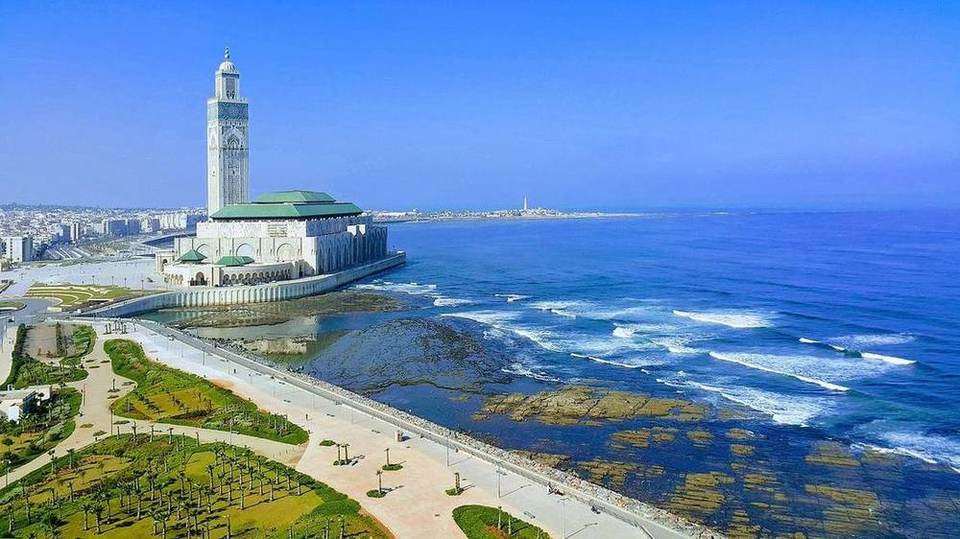
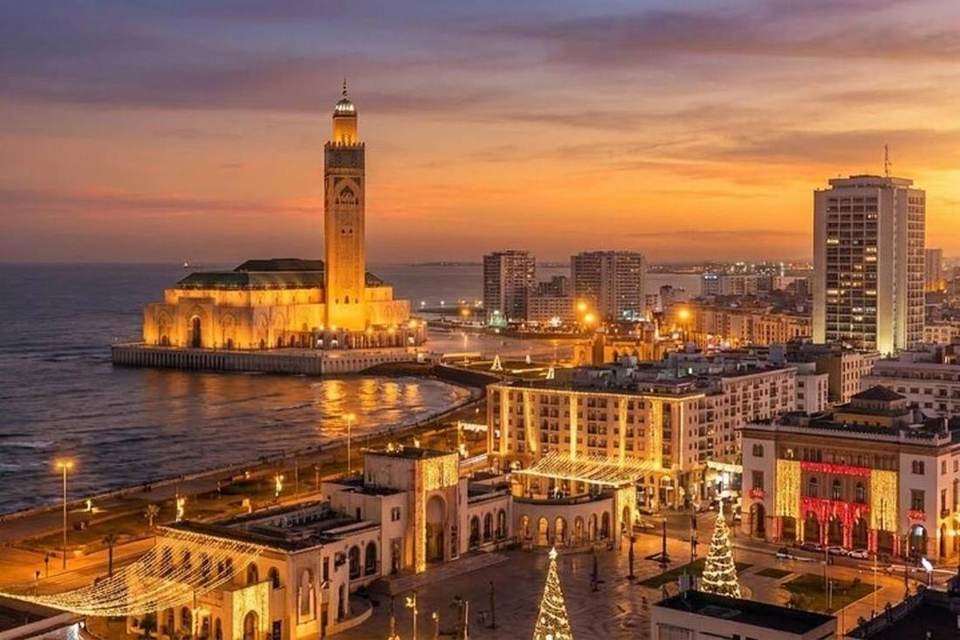
Visit of the Hassan II Mosque, with its 210-metre minaret and its prayer hall overlooking the ocean: it's one of the few mosques in Morocco open to non-Muslims. A walk on the corniche and in the Habous quarter, then an hour's drive to Rabat. Afternoon in the capital: the Kasbah of the Udayas with its white and blue houses above the river, the Hassan Tower and the Mausoleum of Mohammed V with its guards in full dress uniform.
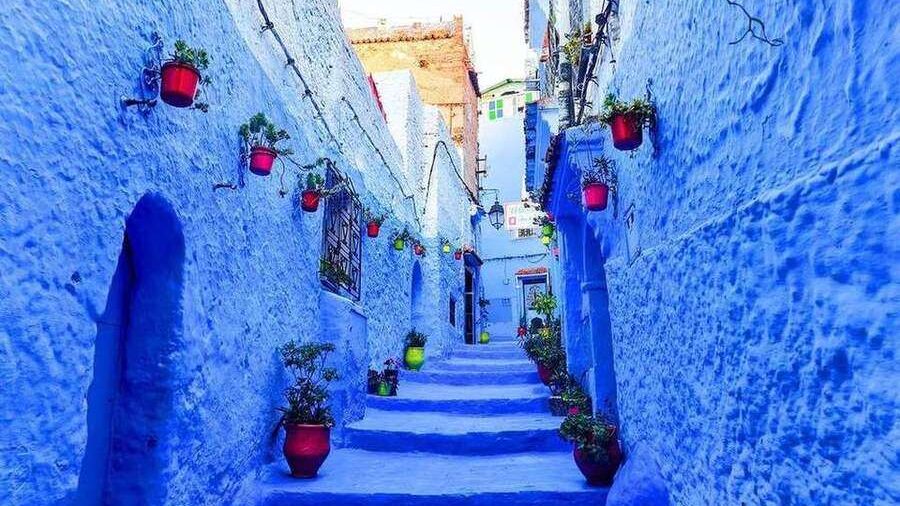
Morning in Rabat for the Kasbah of the Udayas and the Hassan Tower, then about four hours' drive north-east. The Gharb plain gives way to the Rif hills; arrival in Chefchaouen in the afternoon and a first stroll in the blue lanes.
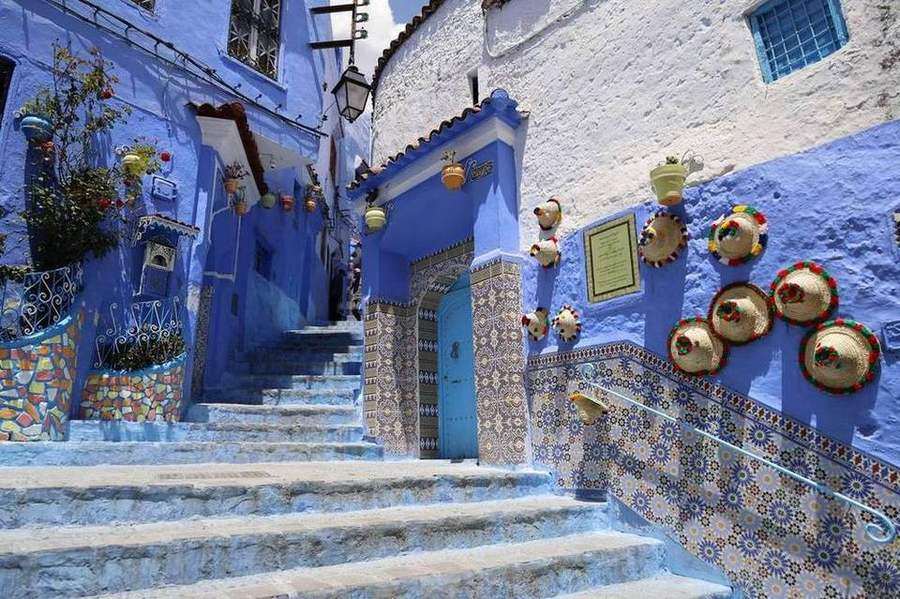
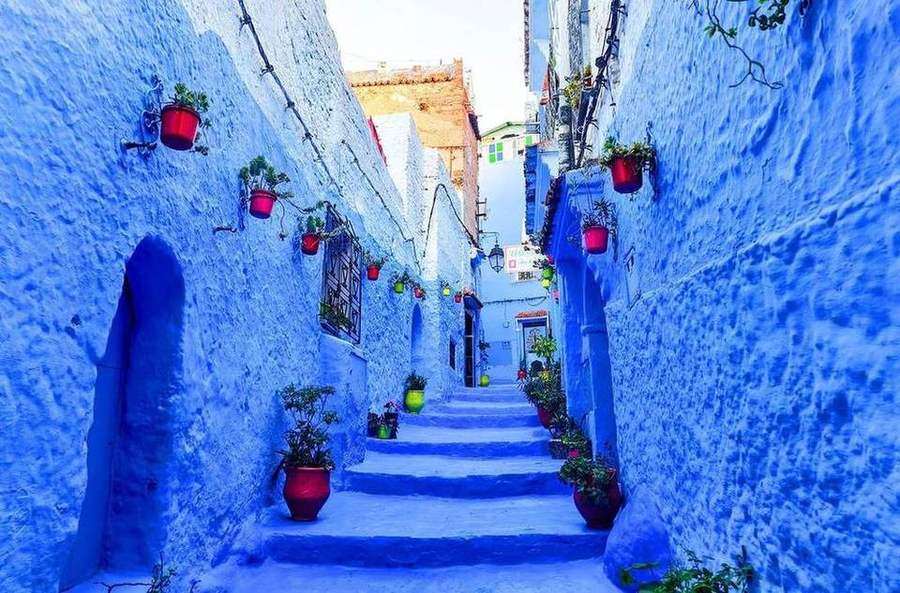
A free day in the blue city. We recommend the excursion to the Akchour waterfalls in the morning, following the river to God's Bridge, and the afternoon in the lanes, the kasbah and the Ras el-Maa spring. Sunset from the Spanish mosque.
We leave the blue city after breakfast and head south. In Volubilis we visit the Roman site, with its mosaics and the Arch of Caracalla, and then Moulay Idriss, the holy town built on two hills. Arrival in Fez in the late afternoon.
A day on foot in the medina with an official guide who speaks your language. We start from above, at the Borj Nord viewpoint, to understand the layout of the city, and then go down into the lanes: fountains decorated with zellige, the el-Attarine madrasa, the henna souk and the slipper souk. We stop at a weaver's and at a pottery workshop where the famous Fez blue is still painted. After lunch we see the tanneries from above and the Mellah, the old Jewish quarter, before returning to the riad.
We leave Fez early and climb into the Middle Atlas: Ifrane with its mountain houses, the ancient cedars of Azrou where the macaques live and the Midelt plateau, dominated by Jebel Ayachi. After lunch the road drops into the Ziz gorges and runs along an endless palm grove to Erfoud. The last kilometres towards the Erg Chebbi dunes, which suddenly appear on the horizon. Night at the foot of the dunes.
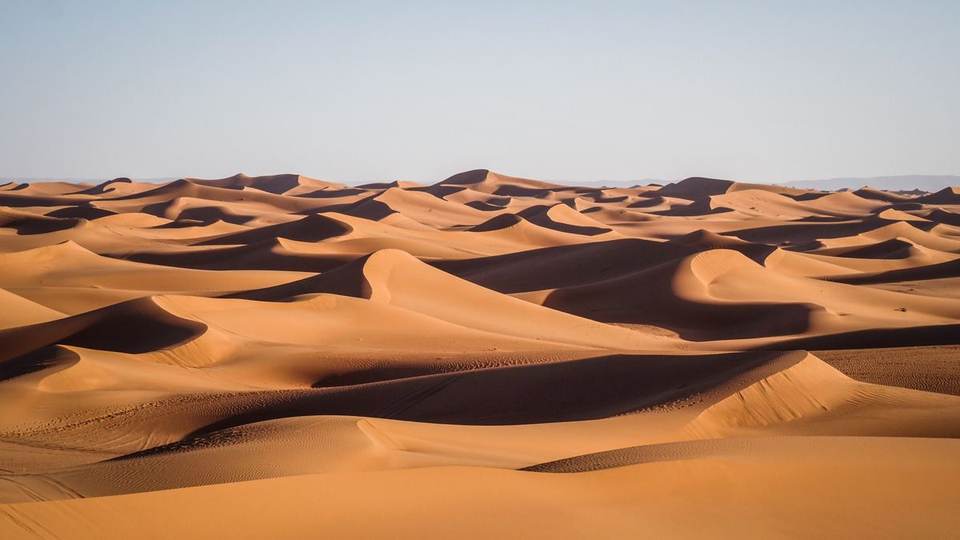
A full day among the dunes. A morning by 4x4 to discover the desert you can't see from the camp: black stone plateaus, small villages, the flamingo lake when there is water, tea with a nomad family. We stop in Khamlia to listen to Gnawa music and in Rissani for lunch with medfouna. In the afternoon, when the heat drops, the camel caravan sets off for the camp. You arrive as the sun sets behind the dunes; after dinner, music around the fire and stars as far as the eye can see.
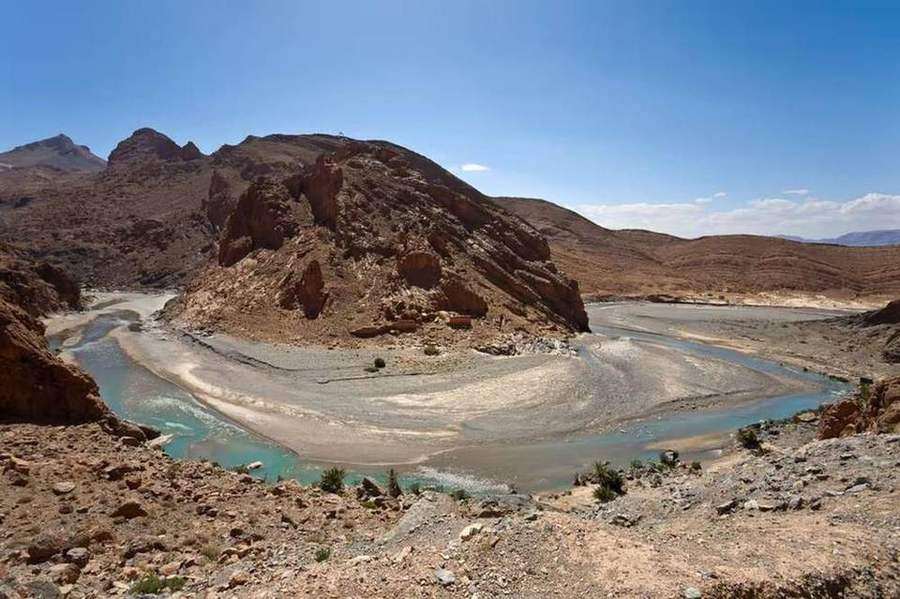
The day begins with dawn light on the dunes, then back to the vehicle and west. The road skirts the ksars of Jorf and the palm groves of Tinejdad, where the khettaras still carry water underground. In Tinghir we enter the Todra Gorge and walk between walls of red limestone, where at midday the sun barely reaches the bottom. Lunch with a meat and prune tajine at a canyon restaurant, then up into the Dadès valley, with earthen kasbahs that blend into the mountain.
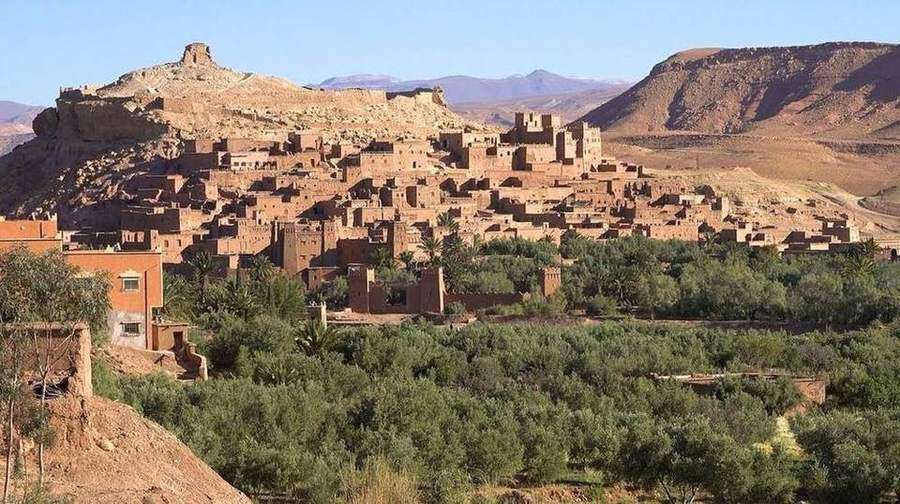
We drive down from the Dadès valley and cross Kelaat M'Gouna, the town of roses: the cooperatives distil the rose water used in cooking and cosmetics, and in May the harvest festival is held. Then Skoura, a palm grove with dozens of kasbahs, including the Amridil kasbah, which appeared on the old 50-dirham banknotes. After Ouarzazate we reach Aït Ben Haddou: we walk up among the earthen houses to the granary at the top, from where you can see the whole Ounila valley. Night in a kasbah.
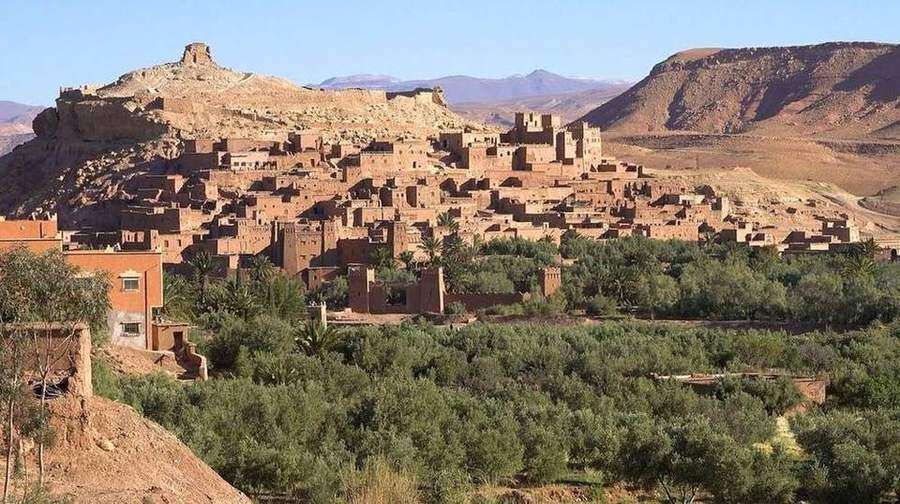
Early risers can see the ksar in the first light, when the village is still empty. Then we climb the High Atlas: hairpin bends, Berber villages of red earth clinging to the slopes and the Tizi n'Tichka pass at 2,260 metres. On the way down we stop at an argan cooperative and at a viewpoint over the valley. Arrival in Marrakech in the early afternoon (about 4 hours).
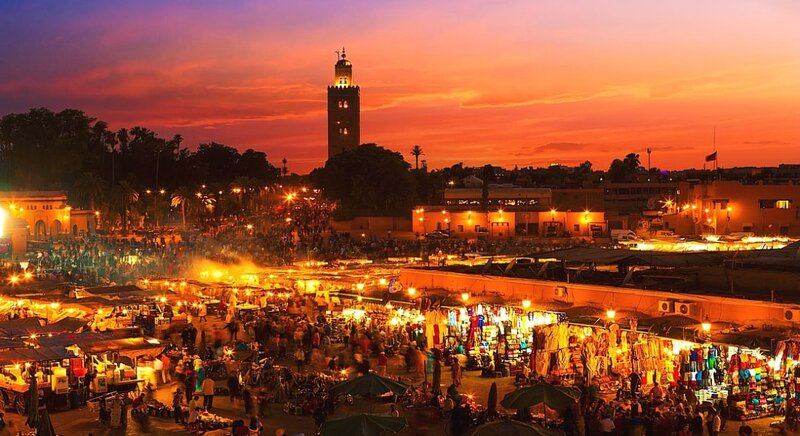
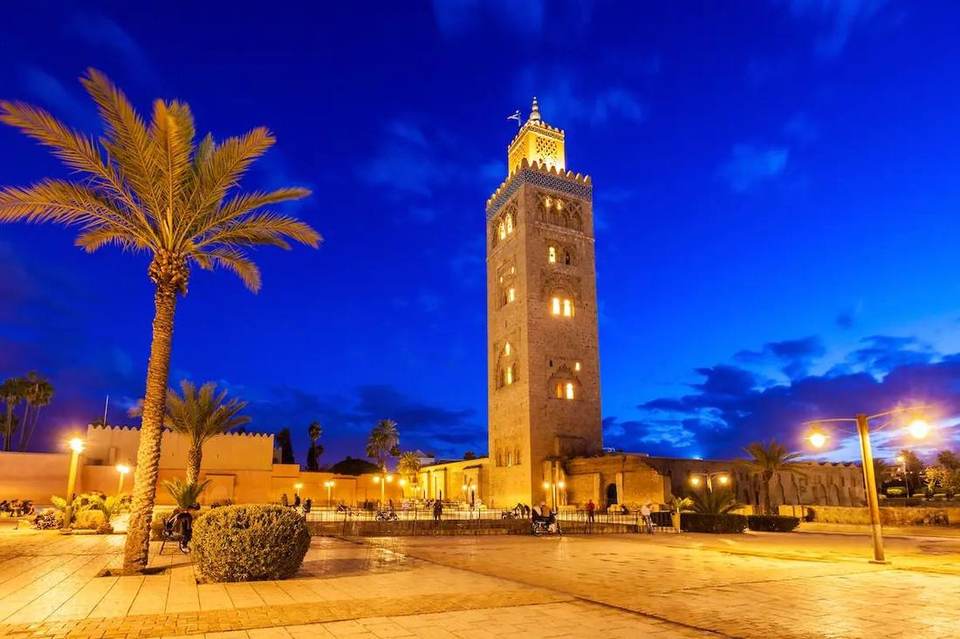
A guided walking tour of Marrakech at a relaxed pace. We start from the Koutoubia and enter the kasbah for the Saadian Tombs, then the Bahia Palace and the Jewish quarter of the Mellah with its spice market. After a coffee break on a terrace, the souks: Semmarine, the dyers' souk with coloured skeins hanging in the sun, and the spice square. Free afternoon for the Majorelle Garden or the Yves Saint Laurent Museum.
We leave Marrakech heading west, through olive groves and ever greener hills. Halfway we stop at a women's cooperative producing argan oil: you'll see how the kernels are cracked by hand and can taste amlou, a spread of almonds, honey and argan. Along the way, if we're lucky, goats perched in the trees. Arrival in Essaouira for lunch: an afternoon on the Skala ramparts with their Portuguese cannons, at the harbour among the blue boats and in the white medina, a UNESCO World Heritage site.
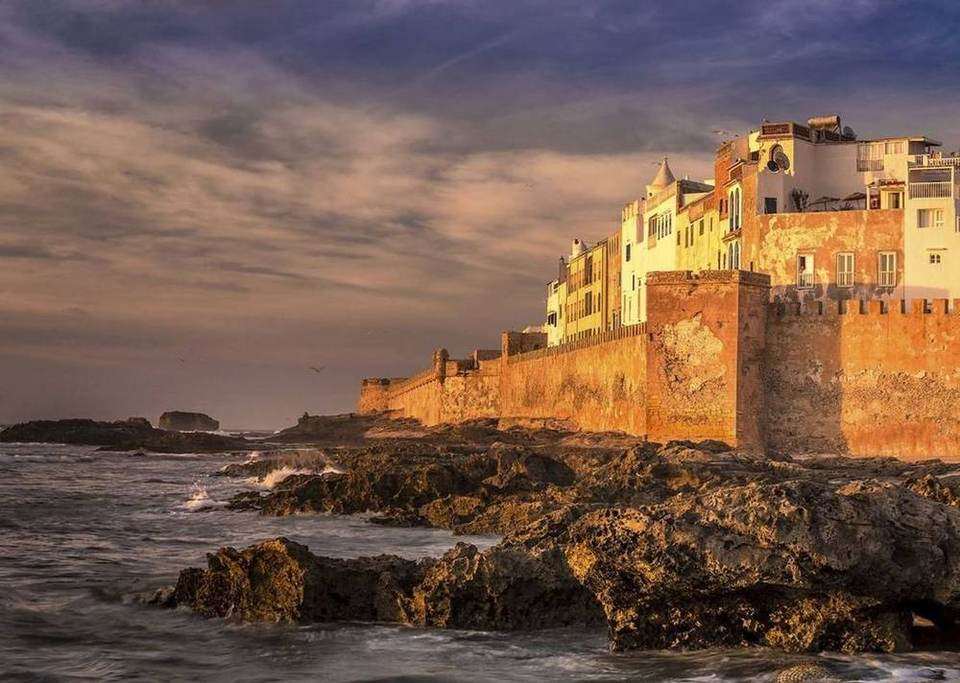
A free day in Essaouira. You can walk along the beach to the ruins of Borj el-Berod, take a surf or kitesurf lesson (there's never a shortage of wind here), visit the medina's art galleries or look for fragrant, glossy thuya wood objects. For lunch, the harbour ritual: pick your fish at the stalls and they grill it on the spot. At sunset, everyone heads to the Skala ramparts.
A coast road north: Safi, the capital of pottery, and El Jadida, with its Portuguese citadel and the underground cistern where light reflects on the water. Arrival in Casablanca in the late afternoon.
Charming riads and kasbahs and, in the desert, comfortable Berber tents with an authentic atmosphere.
Options and supplement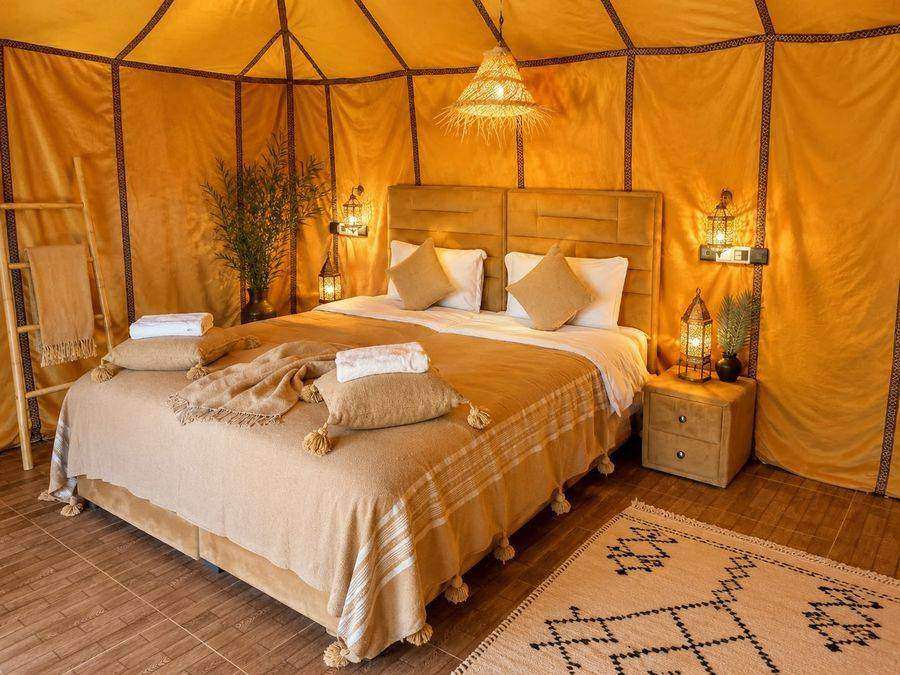
Selected accommodation with extra comfort and, in the desert, tents with private bathroom.
Options and supplement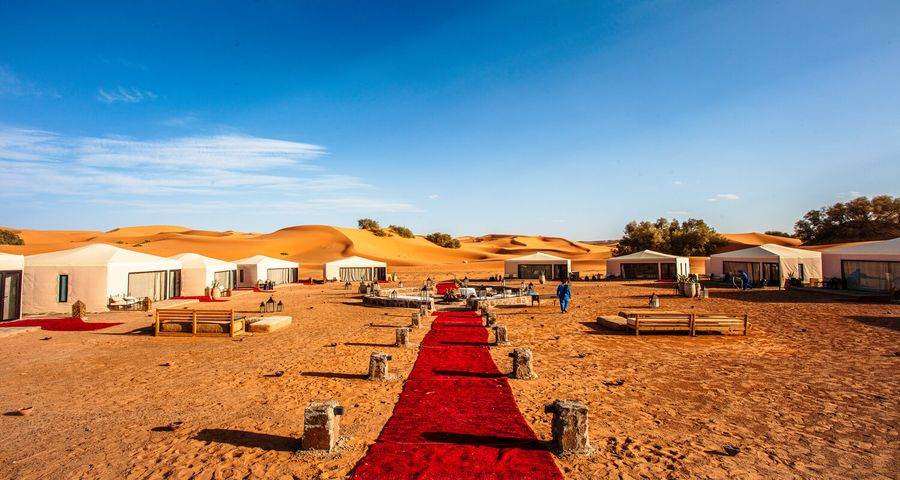
Luxury tented camp with double bed, private bathroom and dinner served under the stars.
Options and supplementWe pick you up from your accommodation at the agreed time.
Your luggage travels with you in the vehicle for the whole route.
If you'd rather not ride a camel, you can reach the camp by 4x4.
Documents, health and safety: check the latest information in the official travel advice for Morocco.
You can add quads, buggies or sandboarding. See the activities.
Have you done this tour with us? Share your experience: you'll help other travellers choose.
An underground hall built by the Portuguese in the 16th century: light enters through an opening in the ceiling and reflects on the water. It has also been used in many films.
Chefchaouen, Volubilis, Fez, two nights in the desert, the canyons…
View tour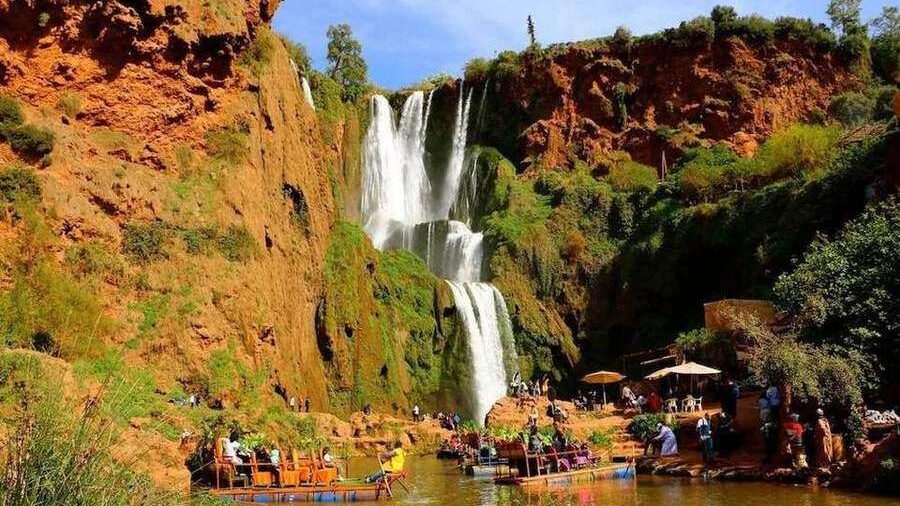
A complete loop from Marrakech: the Ouzoud waterfalls, the Middle…
View tour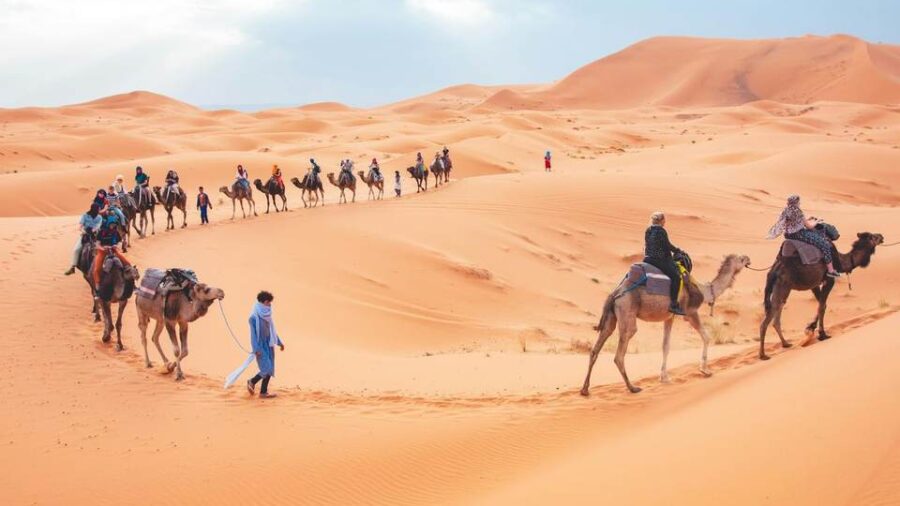
Write a review